
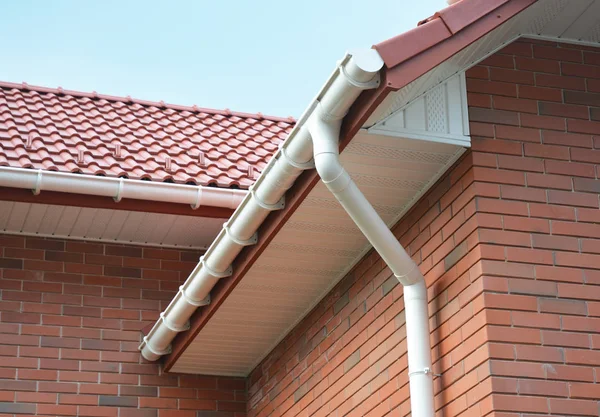
When you live in Phoenix, gutters might not seem like an obvious home improvement. Most of the year is dry, and it is easy to assume that rain gutters are more important in places that receive regular rainfall. But when a heavy storm moves through the Valley, a large amount of water can reach your roof and property in a short period of time.
Without a way to control that runoff, water can pour directly off the roof, collect around the foundation, wash away landscaping, or create muddy and eroded areas around the home.
That is where properly installed rain gutters can make a difference.
Rain gutter installation in Phoenix gives homeowners a way to collect roof runoff and direct it away from areas where concentrated water could cause problems. The goal is not simply to put gutters along the edge of a roof. A properly planned system should work with the roof, property, landscaping, and existing drainage.
Does a Phoenix Home Really Need Rain Gutters?
Not every home has the same drainage needs.
The design of the roof, slope of the property, landscaping, soil, existing drainage, and location of doors, walkways, patios, and other features all affect where rainwater ends up.
A home without gutters may allow water to fall from the roof in concentrated streams. Over time, that water can disturb soil, damage landscaping, leave standing water in certain areas, or create channels where runoff repeatedly travels.
The problem can become more noticeable during heavy rain because a roof collects water from a much larger surface area than the ground immediately below it.
If you have noticed soil washing away near your home, water pooling along the side of the house, stains from repeated runoff, or water pouring heavily from particular sections of the roof, it may be worth looking at how your property currently handles rainwater.
Why Gutters Matter During Phoenix Storms
Phoenix does not receive rain evenly throughout the year. Long dry periods can be followed by intense storms that produce significant runoff in a relatively short amount of time.
That makes drainage particularly important.
A gutter system gives rainwater a controlled path from the roof toward downspouts and, depending on the property, an appropriate drainage area. Instead of allowing water to fall wherever gravity takes it, the system helps manage where that water leaves the roof.
This can be especially useful around entryways, garages, patios, walkways, and landscaped areas where uncontrolled runoff can become a nuisance.
Gutters are not a substitute for every type of drainage solution, and they cannot correct every water problem around a home. But when roof runoff is contributing to a drainage issue, they can be an important part of the solution.
What Happens During Rain Gutter Installation?
A good installation starts before the first section of gutter is attached.
The roofline needs to be evaluated to determine where gutters and downspouts should be positioned. The installer also needs to consider the direction of water flow and where the collected water should be discharged.
Measurements are taken to determine the appropriate gutter lengths and layout. Gutters are then installed with the necessary slope so water can move toward the downspouts instead of remaining trapped inside the system.
Downspouts are positioned to move water away from the building and toward an appropriate discharge location.
The details matter. A gutter that looks perfectly straight but does not drain correctly is not doing its job.
The finished system should be secure, properly aligned, and capable of handling the runoff generated by the roof.
What Type of Gutters Should You Choose?
There is no single gutter style that is right for every Phoenix home.
Gutters are available in different materials, profiles, sizes, and configurations. The best option depends on the home, roof design, budget, appearance, and expected maintenance.
Aluminum is a popular option because it is relatively lightweight and can be used in a variety of residential applications. Other materials may be appropriate depending on the homeowner’s priorities and the contractor’s recommendations.
The size of the gutter system also matters. A small section of gutter may not perform well if it is expected to handle a large volume of runoff.
Rather than choosing a system solely because it looks good or has the lowest initial price, homeowners should consider how the system will perform on their particular roof.
Do Gutters Need to Match the House?
They can.
For many homeowners, appearance is almost as important as function. Gutters are visible from the exterior, so their color and profile can affect the overall appearance of the home.
A well-designed system can blend into the roofline and complement the exterior rather than becoming a noticeable feature.
This is particularly important for homeowners who have recently invested in landscaping, exterior painting, roofing, or other improvements. The gutter system should look like part of the home rather than an afterthought.
What About Downspouts?
Gutters can only do their job if the collected water has somewhere to go.
Downspouts carry water from the gutter system toward the ground. Their placement can have a major effect on how well the overall system manages runoff.
A downspout that releases water directly beside the house may simply move the original problem from the roof edge to the ground.
That is why installation should consider where water will be discharged and what happens after it reaches the ground. Depending on the property, runoff may need to be directed toward an appropriate drainage area or away from vulnerable parts of the landscape.
The right solution varies from one property to another.
How Can Gutters Help Protect Landscaping?
Phoenix homeowners put a lot of effort into their yards, and uncontrolled roof runoff can work against that investment.
When water repeatedly falls onto the same area, it can disturb decorative rock, wash away soil, expose plant roots, or create channels through landscaping.
Gutters and properly positioned downspouts can help redirect that concentrated roof runoff.
They are not a guarantee against landscaping damage, especially during severe storms, but controlling where roof water lands can make it easier to manage drainage around the property.
What Should You Ask Before Hiring a Rain Gutter Installer?
Rain gutter installation in Phoenix is relatively straightforward when everything is planned correctly, but the quality of the planning and installation still matters.
Ask the contractor how the gutter layout will handle runoff from your roof. Find out where the downspouts will be located and where they will direct water.
It is also reasonable to ask about the gutter material, size, installation method, maintenance requirements, and what is included in the project.
If you already have a drainage problem, explain what you have observed rather than simply asking for gutters. For example, tell the contractor where water pools, where soil is being washed away, or where runoff is causing problems.
That information can help determine whether gutters are the appropriate solution or whether another drainage improvement should also be considered.
When Should You Install New Gutters?
There is no need to wait until a drainage problem becomes severe.
If your home currently has no gutters and you are seeing signs of uncontrolled roof runoff, installation may be worth considering. The same is true if existing gutters are sagging, separating, leaking, pulling away from the roofline, or repeatedly overflowing.
Replacing an old system can also be an opportunity to improve the layout. Sometimes the problem is not simply that the gutters are old. The original system may not have been designed effectively for the home’s roof and drainage needs.
A professional evaluation can help determine whether repair, replacement, or a new installation makes the most sense.
Rain Gutter Installation in Phoenix, Is it Worthit?
For homeowners dealing with roof runoff, the value of gutters is not really about how often it rains. It is about what happens when it does.
A roof can collect a substantial amount of water during a storm. Without controlled drainage, that water has to go somewhere, and the areas immediately around the home may end up receiving much more runoff than they can handle.
A properly designed gutter system can give that water a more controlled route away from vulnerable areas.
For some homes, gutters may be a simple improvement. For others, they may be one part of a larger drainage strategy. The important thing is to look at how water currently moves around the property and identify whether changes are needed.
Getting Started With Gutter Installation in Phoenix
If rainwater is creating problems around your home, take a look at what happens the next time a storm passes through. Watch where water comes off the roof, where it collects, and whether soil or landscaping is being disturbed.
Those observations can tell you a lot about whether your current drainage setup is working.
A professional gutter installer can then evaluate the roofline and property and recommend a system suited to the home rather than simply installing a standard configuration.
With the right layout, rain gutter installation in Phoenix can help homeowners take better control of roof runoff. Additionally, it protects vulnerable areas around the property, and make heavy rain easier to manage.
If your home does not have gutters or your existing system is no longer handling runoff effectively, schedule an evaluation with a local gutter professional to discuss your options.